
Deck Stain Vs Deck Paint In Washington State: What Is Better And How To Choose
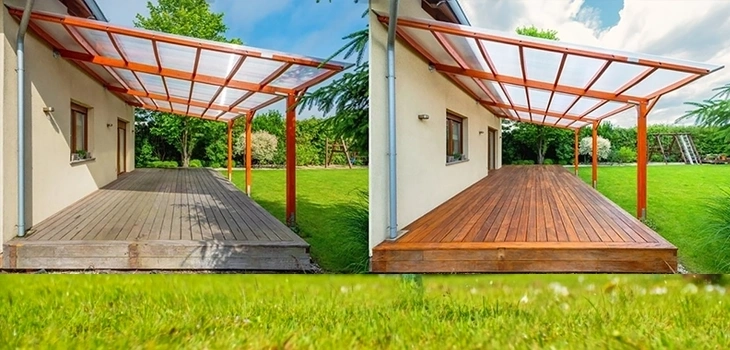
In Washington State, decks go through a lot. Rain, moisture, shade, moss, and temperature changes slowly wear down the surface. That is why choosing the right finish is just as important as choosing the right wood or composite material. A beautiful deck can look worn out fast if the coating is not the right match for our climate.
Homeowners often ask the same question: should I use deck stain or deck paint? Both can look great, but they work differently. The wrong choice, or poor preparation, can cause peeling, cracking, slippery surfaces, or a patchy appearance after one season. The right choice can keep your deck looking clean and protected for years.
In this article, we explain the difference between stain and paint, when each option makes sense, what works best in Washington’s climate, and what steps matter most for a long lasting finish.
1) What Is Deck Stain
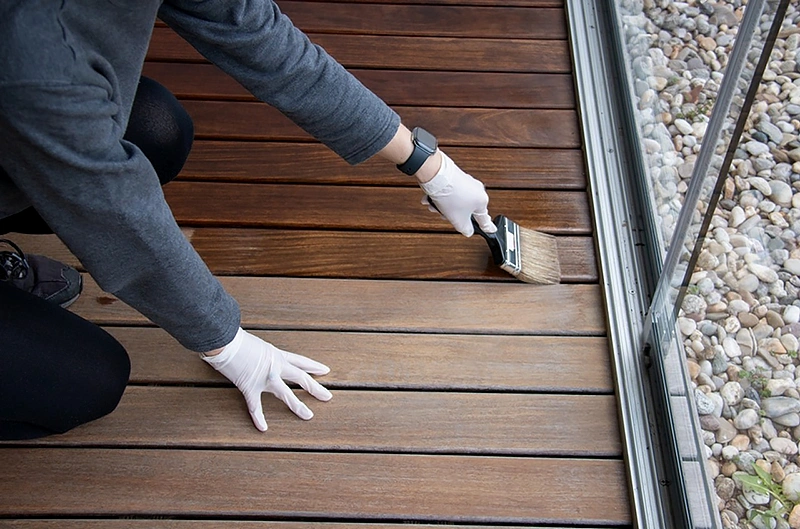
Deck stain is a protective product that is designed to soak into the wood. Instead of creating a thick layer on top, stain penetrates the surface and helps the wood resist moisture and sun damage. Stain also allows the wood to breathe, which is important in wet areas like Seattle, Kirkland, Bellevue, and the entire Puget Sound region.
Common stain types include:
Transparent stain: The most natural look. It shows almost all wood grain. It provides basic protection, but it often needs more frequent maintenance.
Semi transparent stain: Adds color while still showing some wood texture. It is a popular option for many decks because it looks natural and protects well.
Solid stain: Covers the wood almost like paint, but it behaves more like stain. It is often a strong option for older decks because it hides imperfections and typically handles moisture better than paint.
2) What Is Deck Paint
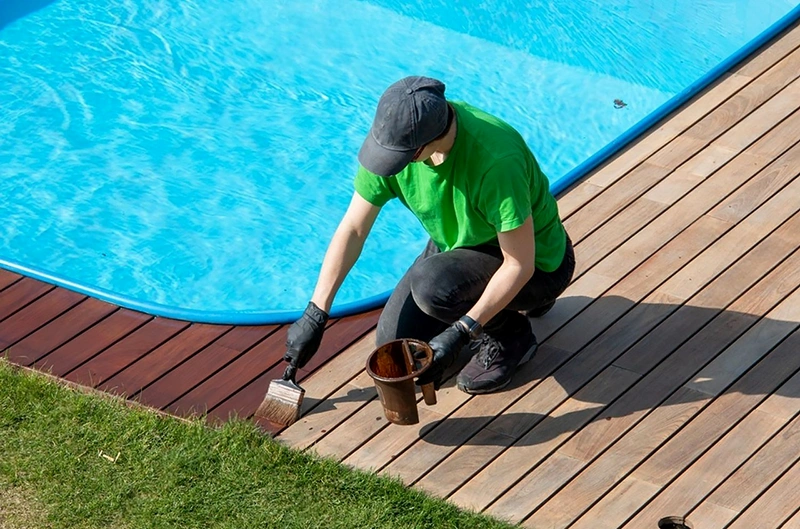
Deck paint creates a thicker protective layer on top of the wood. It hides wood grain and delivers a smooth, uniform color. Paint can look very sharp, especially on older decks that have uneven boards or stains that do not match.
However, paint also seals the surface more tightly. In a wet climate, if moisture is trapped in the boards or framing, paint can blister or peel. That is why paint requires perfect preparation and very dry conditions during application.
3) Stain Vs Paint: Key Differences

A) Moisture Performance In Washington
Moisture is the biggest enemy of any exterior wood surface in Washington.
Stain absorbs into the wood and allows moisture to escape.
Paint sits on top and can trap moisture underneath.
For decks that stay shaded, close to trees, or surrounded by landscaping, stain is often the safer option because it is more forgiving when conditions are damp.
B) Appearance And Style
Stain: A more natural wood look. Even solid stain usually feels more like a deck finish, not like house paint.
Paint: A clean, solid, uniform surface. Great if you want a strong color and do not care about seeing wood grain.
C) Maintenance And Touch Ups
Stain is usually easier to maintain. When stain fades, you can often clean the deck and apply a new coat without heavy scraping.
Paint is harder to patch. If paint starts peeling, the best repair often involves scraping, sanding, priming, and repainting larger sections so the color matches.
D) Safety And Slippery Surfaces
In wet weather, the wrong coating can become slippery. Some paints and some glossy finishes can increase slip risk. In Washington, it is important to choose products with good traction and keep the deck clean from algae and moss.
4) What Works Best In Washington State
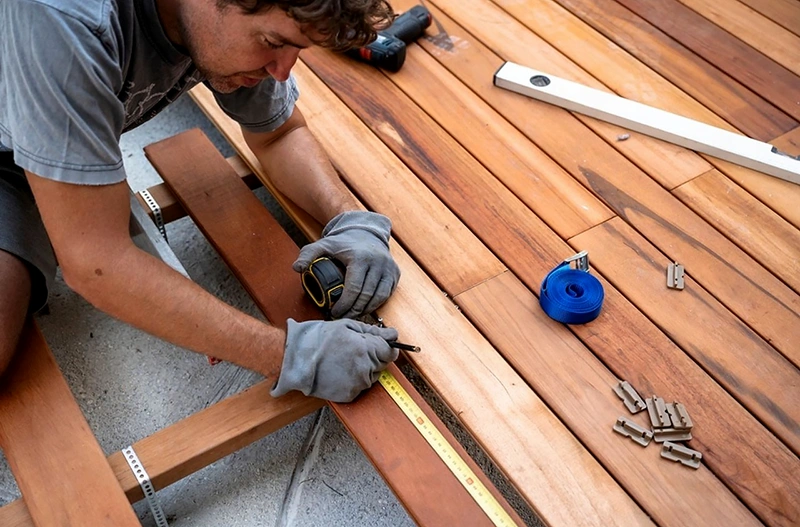
For most wooden decks in Washington, solid stain is often the best balance. It provides strong protection, looks clean, and holds up better than paint in many rainy and shaded conditions.
That said, paint can be a good option in certain cases, especially when the deck gets a lot of sun and stays dry, or when the deck is already painted and the surface is stable.
5) When Stain Is The Better Choice
- Stain is usually the best solution if:
- Your deck is made of natural wood.
- Your deck gets frequent rain and stays in shade.
- You want easier maintenance in the future.
- You prefer a wood style appearance.
- Stain is also a great choice for newer decks or decks that are still structurally strong but need a fresh, even finish.
6) When Paint Can Be A Good Choice
Paint can work well if:
Your deck is older and has uneven color.
You want a full solid color finish.
Your deck gets plenty of sun and dries fast.
The surface can be properly prepared with sanding and priming.
Paint is not recommended when boards stay damp for long periods, because peeling becomes a common issue.
7) The Most Important Step: Surface Preparation
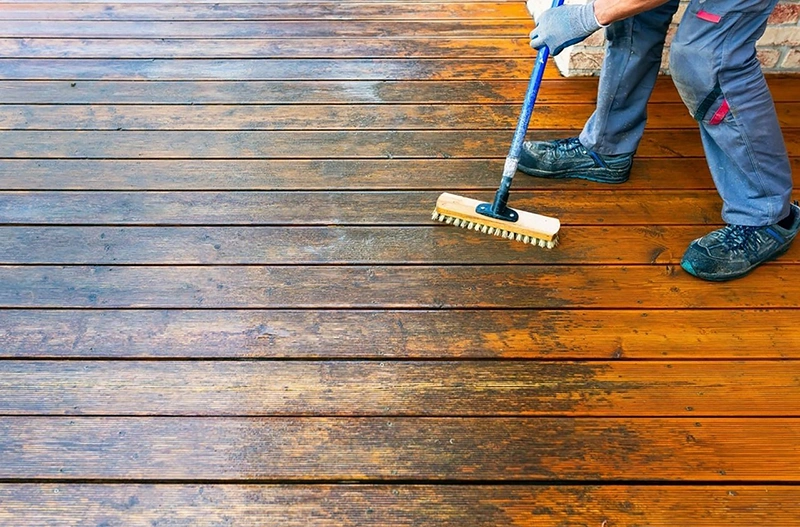
Most coating failures are not caused by the product. They are caused by preparation or timing. In Washington, preparation matters even more because moisture levels are often higher than in drier states.
Proper preparation usually includes:
- Deep cleaning to remove dirt, algae, and mildew.
- Rinsing thoroughly and letting the deck fully dry.
- Replacing damaged boards and fixing loose fasteners.
- Sanding rough areas and removing any loose coating.
- Checking for moisture before applying stain or paint.
If you apply a finish to a damp deck, it may look fine for a few weeks, but problems can appear after the first heavy rain season.
8) Best Time Of Year To Stain Or Paint A Deck In Washington
Timing matters a lot. Ideally, you want a stretch of dry weather so the deck can dry fully before and after coating.
In general, late spring through early fall often provides the best window, but every year is different. A good rule is to avoid coating the deck right after rain. Let the boards dry long enough so moisture is not trapped inside the wood.
Also remember that shaded decks take longer to dry than decks in direct sun.
9) Why Deck Finishes Peel, Crack, Or Fail
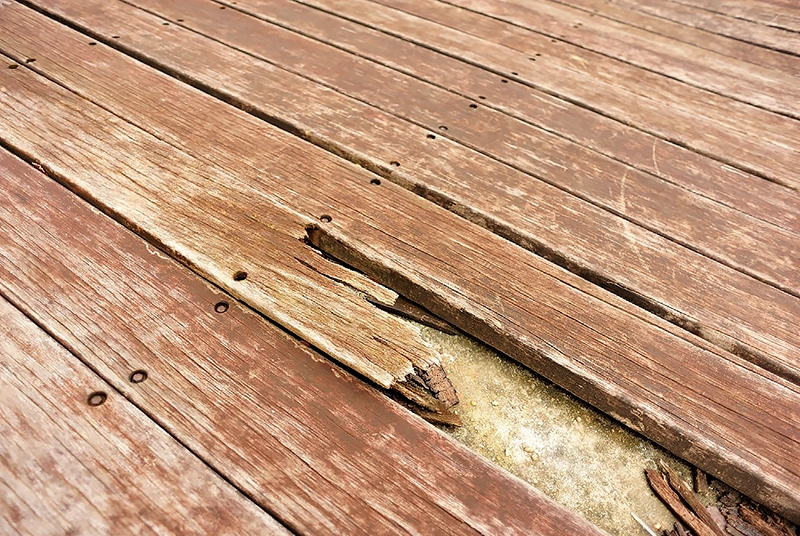
Most problems come from one of these reasons:
- Coating the deck before it is fully dry.
- Applying paint over old stain without correct prep.
- Using the wrong product for wet conditions.
- Skipping cleaning and sanding steps.
- Not allowing enough drying time between coats.
Even the best product can fail if it is applied during a damp period. That is why professional inspection and correct prep can save money long term.
10) Quick Practical Recommendation
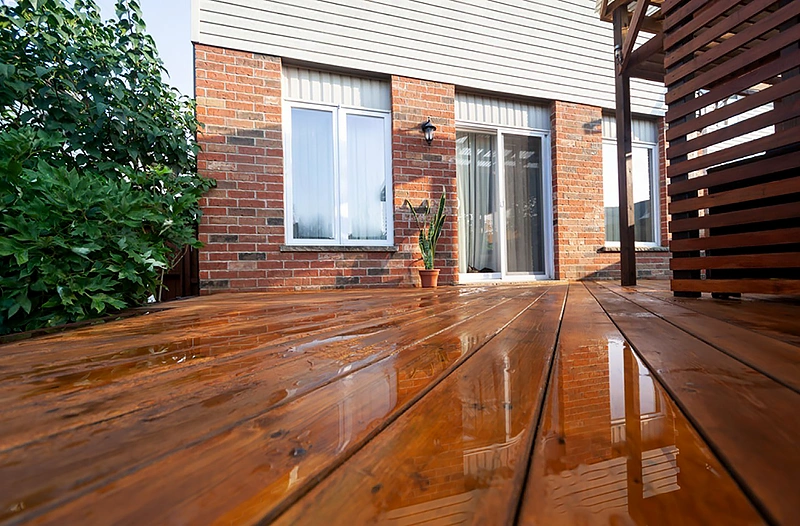
If you are unsure what to choose, start with a simple evaluation:
Is the deck mostly shaded and damp? Stain is usually safer.
Is the deck already painted and stable? Repainting may be the best path.
Do you want natural wood look? Choose transparent, semi transparent, or solid stain.
Do you want a solid color with no wood grain? Paint can work with proper prep.
Final Thoughts
In Washington State, stain is often the most reliable finish for long term performance, especially in rainy and shaded environments. Paint can still be a great option, but it requires stricter preparation and drier conditions to last.
If you want a finish that looks great and holds up through our wet seasons, focus on correct preparation, the right product type, and proper timing. A professional inspection can help you choose the best solution for your specific deck and avoid costly rework later.