
Do I Need a Permit to Build or Rebuild a Deck in Seattle?
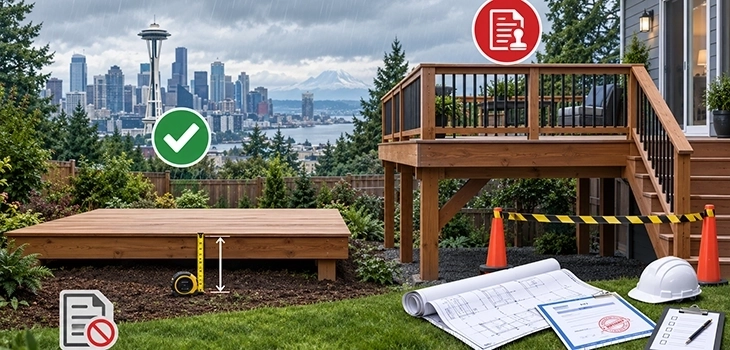
I get this question all the time: "It's just a deck. Do I really need a permit?" Sometimes you do. Sometimes you don't. The confusing part is that there isn't one answer for every deck. Whether you need a permit depends on things like height, location, size and what exactly you're changing. And rebuilding an existing deck doesn't automatically mean you're exempt just because there was already a deck there. Here's the basic breakdown.
The 18-Inch Rule
In Seattle, one of the first numbers to look at is 18 inches.
A deck more than 18 inches above the ground generally requires a permit. Roof decks and decks in environmentally critical areas require permits too.
If you're building a low platform 18 inches or less above grade, a construction permit may not be required based on height alone. But don't use that number as the only test. Where the deck sits on the property and what you're actually building still matter.
Most decks that need a permit qualify for Seattle's simpler subject-to-field-inspection process. But an addition or alteration construction permit is required when the project crosses certain thresholds, for example, if the deck is more than 8 feet above the ground, includes beams 14 feet or longer, is a roof deck, is in an environmentally critical area, has solid-surface deck flooring with no gaps, or is over 750 square feet.
That's why it's worth checking the actual project before construction starts instead of assuming every deck follows the same permit path.
Repairing A Deck Isn't The Same As Rebuilding One
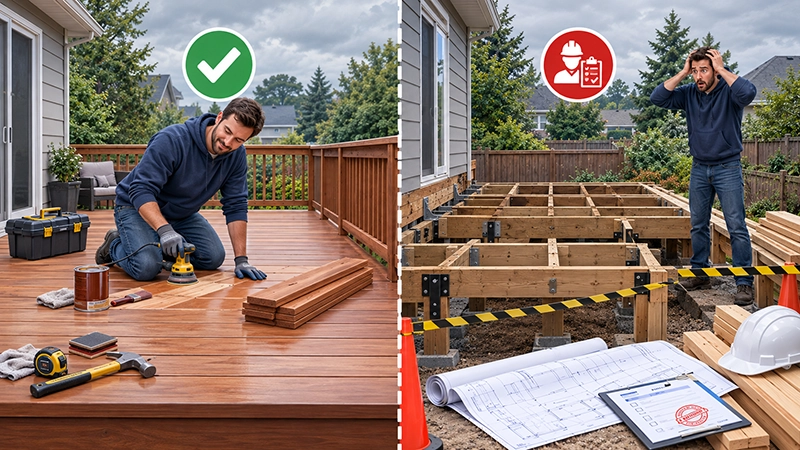
Replacing a few damaged deck boards is very different from tearing out the framing and rebuilding the structure.
If we're sanding a deck, staining it or replacing limited deteriorated material in kind, that may fall into ordinary maintenance or repair.
Once you're changing structural components, posts, beams, joists, ledger connections or the overall deck layout, you need to look much more carefully at permit requirements.
This is where homeowners sometimes get into trouble. The project starts as "we're just replacing the decking," then the boards come off and half the framing underneath needs to be rebuilt.
Now you're doing a different job.
Why The Ledger And Structure Matter
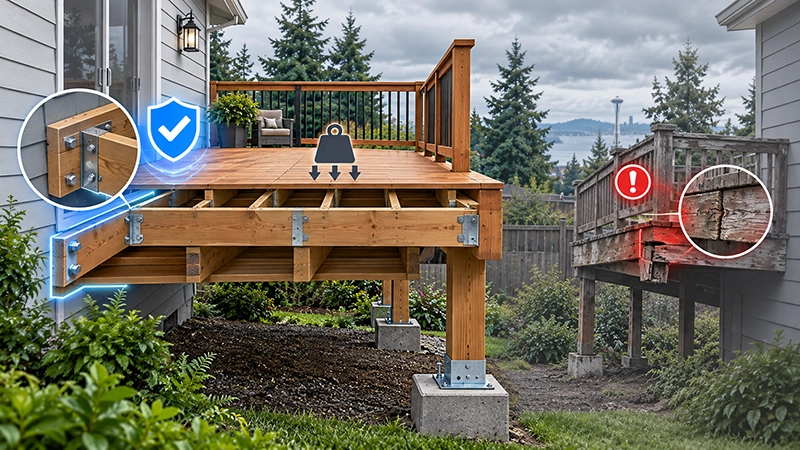
The city isn't worried about whether your new deck boards are brown or gray. They're worried about whether the structure is safe.
The ledger board is a big part of that. That's the board that connects many decks to the house, and Seattle requires it to be connected so the deck will not pull away from the house during an earthquake. Posts, beams, joists and footings also need to provide sufficient structural support.
Seattle requires a minimum deck live-load design of 60 pounds per square foot.
If a deck is elevated, those details become even more important.
That's why simply copying the way an old deck was built isn't always the right answer. An old deck can exist for twenty years and still not meet the requirements you'd have to follow when rebuilding it today.
What Happens If You Build Without One?
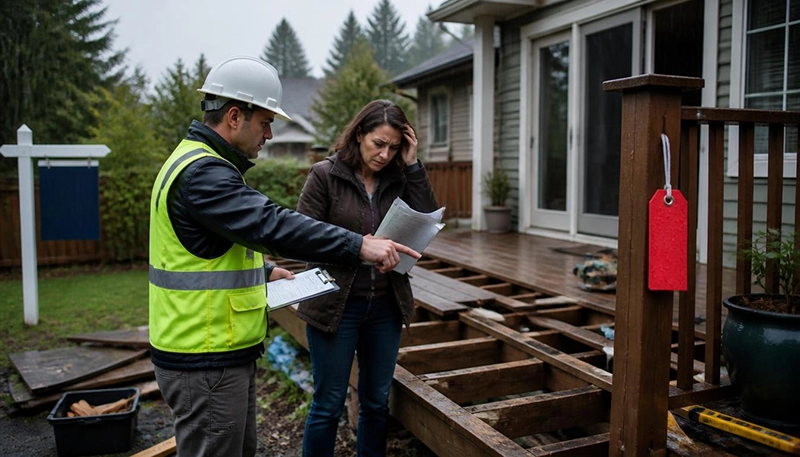
This is where skipping the permit can cause problems later.
Unpermitted work can create problems when the city gets involved, when you sell the house, or when another contractor eventually has to work on the structure. In some cases you may have to provide drawings, open up completed work for inspection or correct things that would have been much easier to address during construction.
Saving time at the beginning can turn into a much bigger headache later.
Figure It Out Before You Build
Permit questions should be answered while you're planning the deck, not after the framing is already standing.
We normally look at the deck height, location, existing structure and what the homeowner wants to change. From there you can determine whether you're dealing with a straightforward repair or a project that needs permitting and possibly additional drawings.
If you're thinking about repairing or rebuilding a deck around Seattle and you're not sure which side your project falls on, send us a few photos and basic dimensions. We can take a look and tell you what we'd check before moving forward.