
Deck Repair Vs Deck Restoration In Washington State: How To Tell Which One You Need
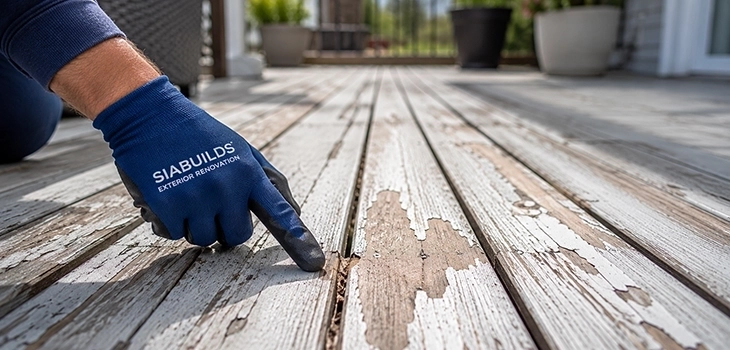
I get this call a lot: "My deck looks terrible, do I need a whole new one?" Nine times out of ten, the answer is no. What people are seeing is usually just the finish giving up: gray, faded wood, maybe a board or two that flexes when you step on it. That's not a rebuild. That's a Saturday.
The real question isn't repair vs. replace. It's whether the problem is skin-deep or structural, and honestly you can figure out a lot of it yourself before you even call someone.
When It's Just Cosmetic
If the wood has gone gray and blotchy, that's sun and rain doing what sun and rain do around here. It doesn't mean the deck is failing, it means the finish wore off years ago. Same with peeling paint or stain that's flaking in sheets. Ugly, not dangerous.
A board or two that's cracked or feels a little soft on top? Usually you just swap those boards and move on. Loose railing, a squeak here and there, that's hardware, not structure. Fifteen minutes with a drill fixes most of it.
When It's More Than That
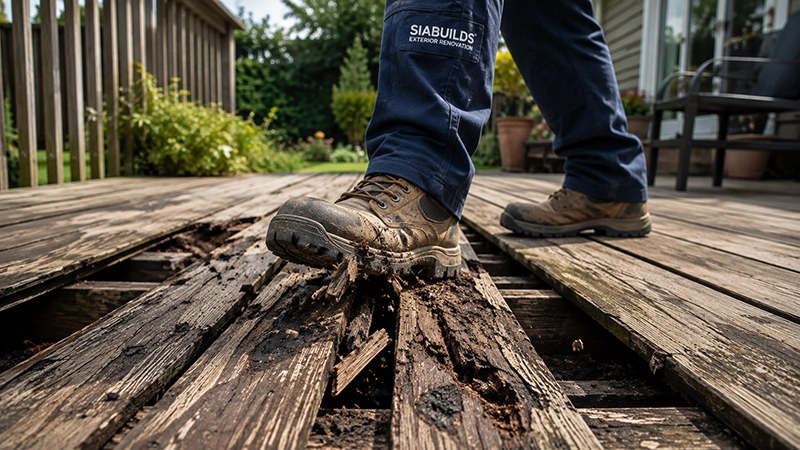
Here's where I tell people to stop DIYing it and get someone to look. If you press on the deck boards near the house and they feel spongy, not just the top, but like the wood underneath is giving, water's gotten into the framing, not just the surface. That's a different job.
The ledger board (that's the piece bolted to your house that the whole deck hangs off of) is the one I check first on every inspection, because if that's rotted, everything downstream of it is a safety issue, not a looks issue. Same story with rust or corrosion on the structural brackets and posts. Those connections are what's actually holding the deck up during a storm.
And if the deck moves or sags when a few people are standing on it, don't wait on that. That's not a "get to it this summer" thing.
What We Actually Do On A Restoration
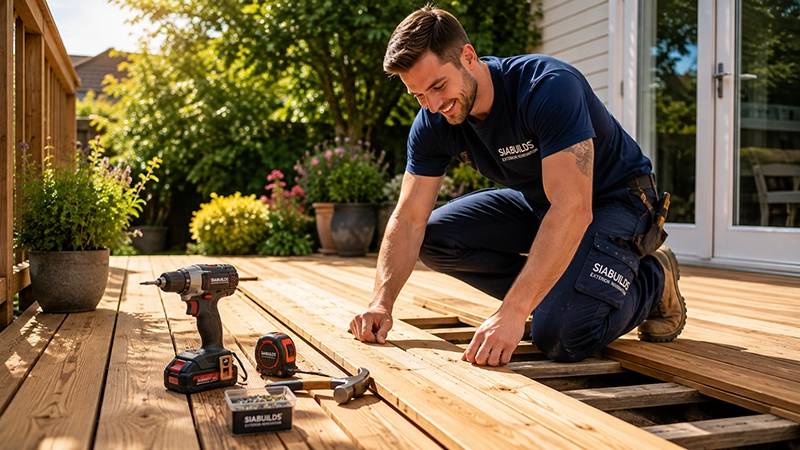
Every job starts with checking the bones: frame, posts, ledger board, before we touch anything cosmetic. No point sanding and staining a deck if what's underneath isn't solid; you'd just be putting a fresh coat on a problem.
From there it's pretty straightforward: swap out any boards that are actually damaged, sand down what's left to get rid of the old worn finish, then stain or paint to protect the wood and bring the color back. We finish by going over all the hardware, screws, railings, connectors, and tightening or replacing anything that's loose.
Nothing fancy about it. It's just doing the steps in the right order so you're not covering up a problem instead of fixing it.
Why Not Wait Until Next Year
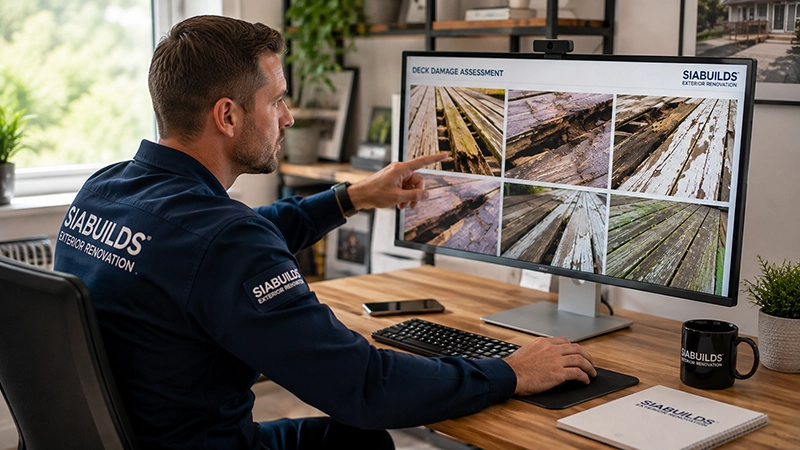
A deck that sits through another Washington winter unprotected is going to take more damage. That's just how it goes with this climate. And the stuff that actually matters, like a rotting ledger board or a rusted post bracket, only gets more expensive to fix the longer it sits. Catch it early and it's a repair. Wait too long and it turns into a rebuild.
If you're not sure which one you're looking at, send us a few photos or let us come take a look. We'll give you a straight answer, not an upsell.